Furnished and Overpriced: The Hidden Cost Buried Inside Thailand's Turnkey Condo Market
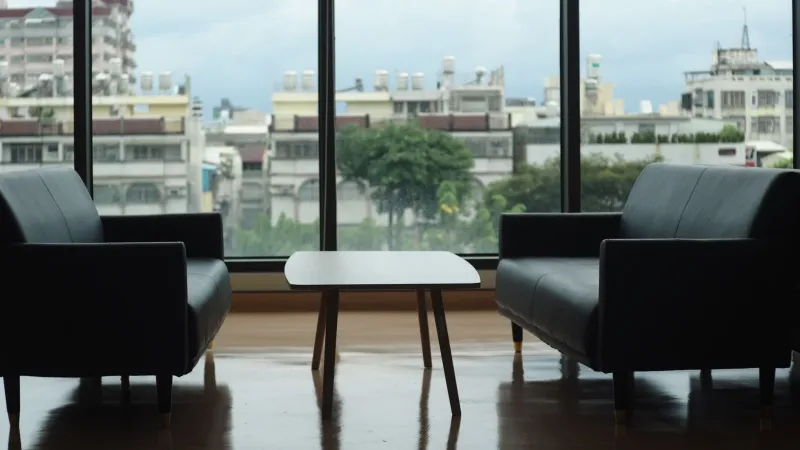
When an American investor first encounters a turnkey condo listing in Bangkok or Phuket, the pitch is seductive: move-in ready, fully furnished, immediately rentable. The marketing brochure shows sleek Italian sofas, integrated kitchen appliances, and hotel-grade bedding. The price tag reflects all of it—and then some.
What the brochure does not explain is that the furniture package embedded in that purchase price typically costs the developer somewhere between 200,000 and 400,000 Thai baht to produce, yet inflates the unit's listed price by 600,000 to 1.2 million baht or more. That gap is not coincidence. It is margin—developer margin, agent margin, and occasionally a financing margin layered on top.
For American investors accustomed to evaluating real estate on a price-per-square-foot basis, the turnkey premium can be surprisingly difficult to detect because it is never itemized. It is simply absorbed into the asking price and presented as added value.
What "Turnkey" Actually Means in the Thai Market
In the United States, a turnkey property typically means the structure is move-in ready—freshly painted, mechanically sound, and free of deferred maintenance. Furnishings are generally separate and negotiable.
In Thailand's foreign-buyer condo market, turnkey means something different. Developers and resale agents frequently bundle furniture, appliances, window treatments, lighting fixtures, and decorative accessories into the unit price as a single line item. The package is often described as a "fully fitted" or "hotel-style" fit-out, and it is marketed as the reason the property commands a rental premium.
The problem is structural. Furniture is a depreciating asset. A sofa purchased new in 2022 is worth a fraction of its original cost by 2025, and a tenant who has lived with it for two years has likely accelerated that depreciation further. When an investor purchases a furnished unit, they are paying real-estate prices for furniture—a category of asset that belongs on a depreciation schedule, not a land title.
The Rental Premium Myth
Developers and agents routinely justify the furnished premium by pointing to higher achievable rents. A furnished unit, the argument goes, commands 15 to 25 percent more in monthly rent than an unfurnished equivalent.
This is partially true in a narrow context—and broadly misleading in practice.
The rental premium for furnished units exists primarily in the short-term and serviced-apartment segment, where nightly or weekly rates apply. In the standard 12-month lease market that most long-term investors target, the premium is far more modest and often nonexistent in oversupplied neighborhoods. A furnished two-bedroom in a mid-tier Bangkok development does not consistently outperform a well-presented unfurnished equivalent when both are competing for the same corporate or expat tenant pool.
Moreover, furnished units introduce complications that bare-shell properties avoid entirely. Tenants damage furniture. Appliances fail. Replacement costs fall on the landlord. Inventory disputes at lease termination are common and occasionally escalate into legal proceedings. Every piece of furniture in a rental unit is a liability as much as it is an amenity.
The Bare-Shell Alternative
Sophisticated American investors operating in Thailand's secondary condo market have increasingly moved toward bare-shell or partially fitted acquisitions—units sold without furniture packages—for precisely these reasons.
In the primary market, bare-shell units are sometimes available directly from developers, particularly in projects that have not yet sold out and where the developer is motivated to close. Negotiating the furniture package out of the deal, or accepting a cash equivalent in lieu of the fit-out, is more achievable than most buyers realize—especially in the current market environment where developer inventory levels remain elevated.
In the secondary market, unfurnished units are common and often priced more transparently than their furnished counterparts. The buyer then sources their own fit-out through local suppliers, which in Thailand's context represents a significant cost advantage.
What a Self-Managed Fit-Out Actually Costs
Thailand's furniture and home goods market is well-developed and competitively priced by regional standards. An investor furnishing a one-bedroom condo to a quality standard appropriate for the mid-market rental segment can typically do so for between 120,000 and 250,000 baht, depending on unit size and specification level. This includes bedroom furniture, living room pieces, kitchen essentials, and basic appliances.
Contrast that figure with the implied furniture premium embedded in a comparable turnkey listing—often 500,000 to 900,000 baht above the bare-shell equivalent—and the arithmetic becomes stark. An investor who negotiates a bare-shell purchase and manages their own fit-out can enter the same rental market at a meaningfully lower cost basis, improving both their gross yield and their downside protection.
The fit-out process itself is manageable even for investors who are not physically present in Thailand. Property management companies and interior contractors in Bangkok, Chiang Mai, and Phuket routinely handle remote fit-outs for foreign owners, providing itemized quotes, photographic progress updates, and completion reports.
Negotiating the Furniture Out of the Deal
For investors evaluating turnkey listings, the first step is establishing what the unit would be worth without the furniture. Comparable bare-shell sales in the same building or immediate vicinity provide the clearest benchmark. In buildings where both furnished and unfurnished units have transacted recently, the implied furniture premium becomes quantifiable.
Armed with that data, a buyer can approach the negotiation from a position of analytical clarity rather than developer-framed assumptions. Requesting a line-item breakdown of the furniture package is a reasonable ask and one that a motivated seller will generally accommodate. If the seller resists transparency on this point, that resistance itself is informative.
In cases where the seller is unwilling to separate the furniture from the transaction, a cash-back arrangement—where the buyer accepts the furniture but receives a post-closing credit equivalent to an agreed portion of its value—is an alternative structure worth exploring with legal counsel.
The Depreciation Schedule You Are Inheriting
Perhaps the least-discussed dimension of the furnished premium is the depreciation liability it transfers to the buyer. When an investor purchases a unit that has been tenanted and furnished for three or four years, they are acquiring furniture that is already well into its useful life. Replacing worn or outdated pieces is an expense that arrives early in the ownership cycle, often before the property has generated sufficient income to absorb it comfortably.
Buyers who enter at the bare-shell level set their own depreciation clock. The fit-out is new, the condition is known, and the replacement timeline is predictable. That degree of control has real financial value—value that turnkey marketing consistently obscures.
A More Disciplined Entry Point
The turnkey model is not without merit for certain buyer profiles. Investors who lack the time, local contacts, or inclination to manage a fit-out may find the convenience worth a portion of the premium. That is a legitimate trade-off.
But for American investors approaching Thailand as a yield-driven asset class—where entry price is the primary lever of long-term return—the furniture trap is a cost center masquerading as a value-add. Identifying it, quantifying it, and negotiating around it is among the most straightforward ways to improve the economics of a Thai condo acquisition before the ink dries on the purchase agreement.