Distress Pricing in Thailand's Secondary Condo Market: Why the 2024–2025 Oversupply Cycle Is Unlike Any Before It

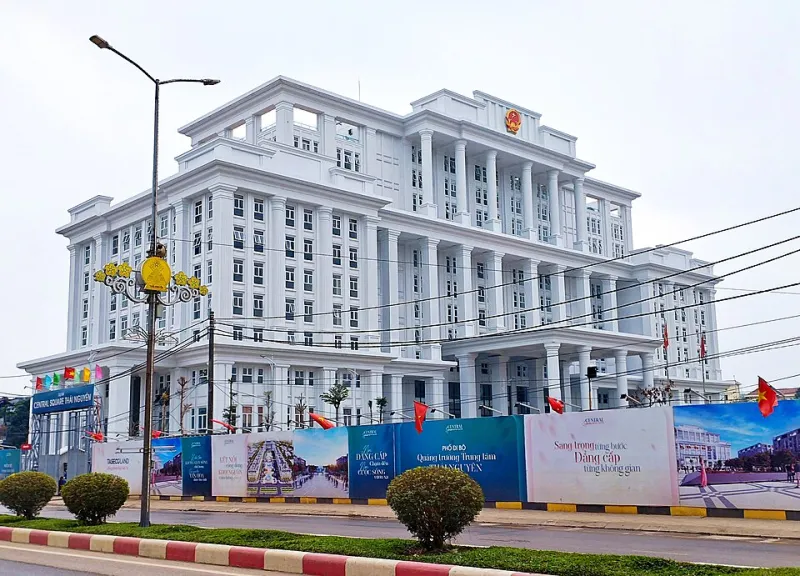
Photo: Preecha.MJ, CC BY-SA 4.0, via Wikimedia Commons
Oversupply is not a new problem in Thailand's condominium market. The country has navigated several cycles of excess inventory over the past two decades, and each time, observers have debated whether the correction represents a buying opportunity or the beginning of a structural decline. Most cycles ultimately resolved in favor of the patient investor. The question for 2024 and 2025 is whether the same conclusion applies—and whether this particular cycle carries characteristics that either amplify the opportunity or change its nature entirely.
The answer, based on a careful reading of current supply-demand data, is that this cycle is meaningfully different from its predecessors in ways that both increase the distress in certain segments and create more durable recovery conditions in others. Investors who understand the distinction will be positioned to act with conviction. Those who treat the current environment as a uniform discount opportunity may find themselves holding assets that recover slowly, if at all.
The Scale of the Current Overhang
Thailand's condominium market entered 2024 carrying an unsold inventory burden that, in non-prime locations, has reached levels not seen since the period immediately following the 1997 Asian financial crisis. The Bangkok metropolitan area alone holds an estimated 60,000 to 80,000 unsold completed units across various price segments, with the mid-market and lower-mid-market tiers accounting for the largest concentrations.
Pattaya, Chonburi, and the outer Bangkok provinces carry additional inventory that is difficult to quantify precisely because a portion of it sits in projects that have stalled mid-construction or changed ownership since original pre-sales were completed. Phuket and Samui, while supply-constrained in their prime beach-adjacent zones, have seen significant new supply delivered in secondary corridors that lack the infrastructure or rental demand to absorb it efficiently.
This is not a market-wide phenomenon. Prime central Bangkok—specifically the Sukhumvit corridor from Nana to Ekkamai, Sathorn, Silom, and the immediate vicinity of major BTS interchanges—continues to exhibit supply discipline and demand resilience. The distress is concentrated in locations that were developed on the assumption that infrastructure buildout, tourism recovery, or demographic growth would arrive faster than it has.
Why This Cycle Differs From Prior Corrections
Previous Thai condo oversupply episodes were driven primarily by speculative domestic demand—Thai buyers purchasing off-plan units with the intention of flipping before or shortly after completion. When sentiment shifted, those speculators became motivated sellers, and prices fell until the inventory cleared.
The current oversupply has a different composition. A significant portion of the excess inventory was developed in anticipation of Chinese buyer demand that materialized only partially and then retreated as China's own economic conditions deteriorated and outbound property investment sentiment cooled. Developers who had calibrated entire projects to the preferences, price points, and unit configurations favored by Chinese buyers—small studios and one-bedrooms in the 1.5 to 3 million baht range—now hold inventory that is poorly matched to the preferences of the remaining active buyer pool.
This mismatch matters because it concentrates distress in a specific unit type and price band rather than distributing it evenly across the market. It also means that the recovery timeline for these units is tied not to a general improvement in Thai economic conditions but to a specific recovery in Chinese outbound investment appetite—a variable that is harder to forecast and that American investors have less analytical familiarity with.
A second distinguishing feature of the current cycle is the role of developer financial stress. Several mid-tier Thai developers who relied heavily on pre-sales revenue to fund construction are now facing cash flow constraints as new pre-sales have slowed. This has created a category of motivated seller that did not exist in the same form during previous corrections: developers willing to negotiate on completed but unsold units at discounts that would have been unthinkable during the pre-2020 period.
Identifying Genuine Distress Versus Structural Weakness
For American investors, the critical analytical task is distinguishing between units that are distressed due to cyclical oversupply—and will therefore recover as conditions normalize—and units that are structurally impaired by location, configuration, or building quality issues that no market cycle will fully correct.
Several indicators help make this distinction. First, examine the rental absorption rate for the building and immediate submarket. A building with a 40 percent vacancy rate in a neighborhood with strong employment anchors, transit access, and an established expat population is experiencing cyclical distress. A building with similar vacancy in a peripheral location without those characteristics is exhibiting structural weakness.
Second, assess the unit configuration relative to the rental demand profile of the neighborhood. A 35-square-meter studio in a building that primarily houses long-term expat tenants—who generally prefer one-bedroom units of 45 to 55 square meters—faces a structural configuration disadvantage that discounted pricing alone cannot overcome.
Third, evaluate the building's juristic person financial health. Oversupplied buildings often have elevated vacancy rates that reduce the common area maintenance fee income available to the juristic person, leading to deferred maintenance, deteriorating common areas, and a negative feedback loop that further suppresses resale values. Requesting the building's financial statements before purchasing is not optional in this environment—it is essential.
The Neighborhoods Where Distress Is Creating Actionable Entry Points
Several specific market segments within Thailand's broader landscape warrant attention from disciplined buyers in the current environment.
In Bangkok, the mid-Sukhumvit corridor from On Nut to Udom Suk—served by the BTS Sukhumvit Line—has seen meaningful price softening in mid-market buildings completed between 2018 and 2022. These locations have strong long-term rental demand fundamentals, established expat communities, and improving retail and dining infrastructure. The softness in this corridor reflects oversupply and post-pandemic demand disruption rather than location obsolescence, and it is the type of distress that has historically resolved within a three-to-five-year horizon.
In Pattaya, the distinction between the beachfront and near-beachfront zone and the secondary corridors further inland is sharper than it has ever been. Secondary locations in Pattaya face a combination of oversupply, shifting tourist demographics, and infrastructure gaps that make a sustained recovery less certain. Beachfront and first-row buildings, by contrast, face supply constraints that are geographic in nature and therefore durable.
In Chiang Mai, a modest but real increase in distressed secondary inventory has emerged as the post-pandemic remote-work surge has partially unwound. The market here is smaller and less liquid than Bangkok, which means that entry prices can be more attractive but exit timelines are longer and less predictable.
Deploying Capital in a Distressed Environment
The conditions described above do not argue for broad, undifferentiated acquisition of discounted Thai condos. They argue for selective, analytically rigorous acquisition in specific buildings, specific unit configurations, and specific neighborhoods where cyclical distress is the primary explanation for current pricing.
Investors who approach this environment with patience—who are willing to conduct thorough due diligence, negotiate from a position of clear market data, and hold assets through the remainder of the supply absorption cycle—are looking at entry points that are unlikely to recur in the same form once the current overhang clears. The window is real. But it requires precision to exploit.