What the IRS Sees When You Sell Thai Property: The Currency Gain Problem American Investors Rarely Anticipate
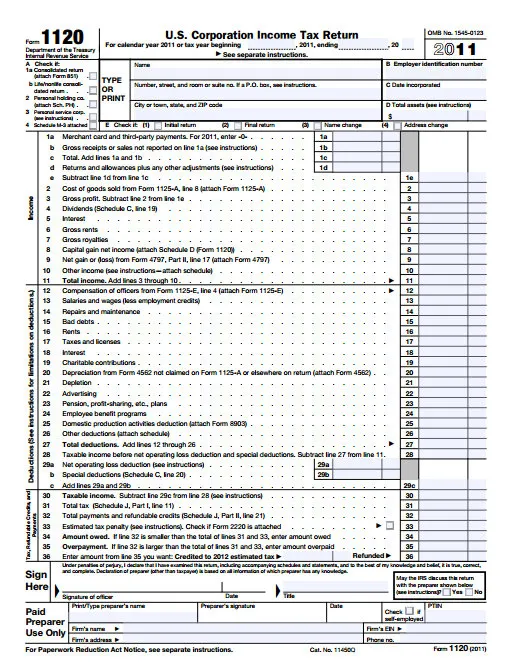
Photo: Internal Revenue Service, Public domain, via Wikimedia Commons
The Applause Before the Bill Arrives
Imagine purchasing a condominium in Bangkok's Sukhumvit corridor for the equivalent of $180,000 USD in 2019. By 2024, that unit has appreciated to roughly $230,000 USD in Thai baht terms — a tidy $50,000 gain on paper. You sell, wire the proceeds to your U.S. bank account, and prepare to celebrate a successful international investment.
Then your accountant calls.
For a meaningful number of American investors in Thai real estate, that phone call carries unwelcome news: the tax liability on their foreign property sale is substantially larger than they anticipated. In some cases, investors discover they owe the IRS on gains they did not actually receive in any economically meaningful sense. This is not a theoretical risk. It is a structural feature of how U.S. tax law treats foreign real estate transactions, and it catches even experienced investors off-guard.
Why the Foreign Earned Income Exclusion Does Not Help You Here
One of the most persistent misconceptions among Americans purchasing property abroad is the belief that the Foreign Earned Income Exclusion (FEIE) offers some shelter for real estate gains. It does not. The FEIE — which allows qualifying Americans living abroad to exclude a portion of their earned income from U.S. taxation — applies exclusively to wages, salaries, and self-employment income derived from active work performed outside the United States.
Capital gains from the sale of foreign real estate are entirely outside its scope. Whether you are a long-term expatriate in Chiang Mai or a U.S.-based investor who purchased a Phuket villa as a passive holding, the proceeds from selling Thai property are subject to U.S. capital gains tax in full. The FEIE provides zero offset.
This distinction matters enormously at the planning stage. Investors who structure their lives around the FEIE — and there are many — sometimes assume their entire overseas financial picture benefits from that exclusion. Thai property gains represent a significant carve-out from that assumption.
The U.S.-Thailand Tax Treaty Gap
The United States and Thailand do not currently have a comprehensive income tax treaty in force. This is a material fact that distinguishes Thailand from markets such as the United Kingdom, Germany, or Japan, where bilateral agreements can reduce or eliminate double taxation on investment income.
Without a treaty, American investors selling Thai property face the possibility of paying capital gains tax in both jurisdictions. Thailand imposes its own withholding tax on property sales — typically calculated on either the appraised value or the registered sale price, whichever is higher — and the U.S. imposes its own capital gains tax on the same transaction. The U.S. Foreign Tax Credit can offset some of this exposure, but the mechanics are complex, and the credit does not always produce a clean dollar-for-dollar reduction.
Investors should engage a tax professional with specific experience in cross-border U.S.-Thailand transactions before assuming the Foreign Tax Credit will neutralize their Thai tax liability. The credit has limitations, carryforward rules, and basket restrictions that can produce unexpected outcomes.
Phantom Income: The Problem That Doesn't Announce Itself
Perhaps the most counterintuitive element of U.S. taxation on Thai real estate is the phantom income problem — a scenario in which currency fluctuations create a taxable gain even when the investor has not actually profited in real economic terms.
Here is a concrete illustration. Suppose an American investor purchases a Pattaya beachfront unit in 2020 when the exchange rate is approximately 31 Thai baht per U.S. dollar. The purchase price is 5,500,000 baht, which translates to roughly $177,400 USD at the time of purchase. Five years later, the investor sells the property for 5,700,000 baht — a modest 200,000 baht appreciation in local currency terms.
However, by the time of sale, the baht has strengthened against the dollar, and the exchange rate is now 28 baht per dollar. The sale proceeds of 5,700,000 baht now convert to approximately $203,500 USD. From the IRS's perspective, the investor has realized a gain of roughly $26,100 USD — even though the property barely moved in baht terms and the investor's actual purchasing power improvement was marginal.
The reverse is equally frustrating: an investor can experience genuine baht-denominated appreciation and still face a U.S. tax bill that consumes a disproportionate share of the gain simply because the baht weakened during the holding period, compressing the dollar-denominated return while the IRS still taxes the nominal gain.
Rental Income Adds Another Layer
For investors who generate rental income from Thai property prior to sale, the tax picture becomes more layered still. Thai rental income is subject to Thai withholding tax, and the same income must be reported on the investor's U.S. federal return. The Foreign Tax Credit can help here as well, but rental income from foreign property also triggers FBAR and FATCA reporting obligations if the associated bank accounts or asset values meet the relevant thresholds.
Missing these reporting requirements — even inadvertently — can result in penalties that dwarf any tax savings the investor achieved through offshore structuring.
Strategies for Reducing Exposure
None of this is intended to suggest that American investment in Thai real estate is inadvisable. Rather, these are structural realities that reward informed investors and penalize those who plan reactively.
Several approaches can meaningfully reduce exposure. First, establishing a clear cost basis in U.S. dollars at the time of purchase — including all acquisition costs, legal fees, and documented improvements — ensures the investor can defend the lowest defensible gain figure when the property is eventually sold.
Second, investors with long time horizons may benefit from holding property in a tax-advantaged structure, though the implications of corporate ownership in Thailand carry their own trade-offs that deserve separate analysis.
Third, timing a sale to coincide with favorable exchange rate conditions can legitimately reduce the dollar-denominated gain the IRS will recognize. This requires active monitoring of the baht-dollar relationship, not simply a passive wait-and-sell approach.
Finally, working with a CPA who specializes in international real estate — not merely a generalist familiar with foreign income — is the single highest-return investment a prospective Thai property buyer can make before signing any purchase agreement.
The Return You Actually Keep
At 119 Asset Thailand, our view is straightforward: Thai property offers genuine opportunity for American investors willing to engage with the market on its own terms. But the return that matters is the after-tax, after-friction return that arrives in your account — not the headline appreciation figure quoted in a developer's brochure.
The investors who perform best in this market are those who model their tax obligations before they commit capital, not after they have already signed a sales contract. The IRS does not offer a grace period for cross-border enthusiasm.